

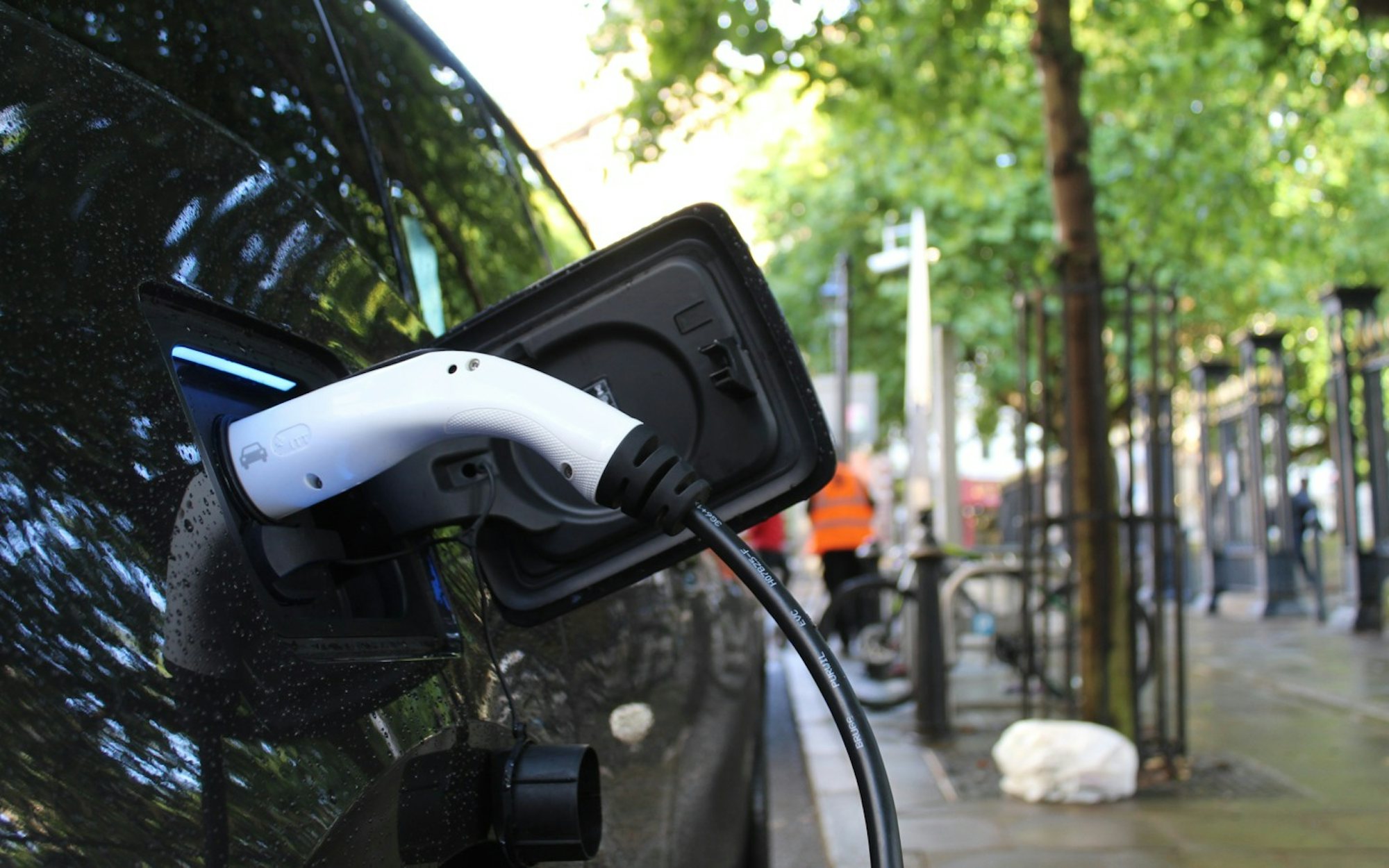
What is an eco-car?
An eco-car is a car that runs on fuels such as electricity, ethanol, biogas or other renewable fuels. However, a car that runs on petrol or diesel can also be classified as an eco-car, if it is sufficiently fuel-efficient.
All green cars on kvdbil.se meet at least one of the requirements below:
If the car can be refueled with gas
If the car emits less than 70 g CO2/1km
If the car is an electric car or a plug-in hybrid
These three requirements determine which cars are visible in the “Environmental cars” filter on kvdbil.se. This definition also applies to our export rules .
How do I find an environmentally friendly car on kvdbil.se?
The easiest way to find an eco-friendly car is to filter by Eco-friendly cars in the list of all cars currently for sale. You can then choose which car model suits you best, such as a station wagon or SUV.
What do the different emission classes mean?
All new cars are now classified according to their exhaust emissions, to determine the environmental impact of the car's emissions. Emissions of carbon monoxide (CO), hydrocarbons (HC), nitrogen oxides (NOx) and particulate matter determine which class the car falls into.
According to EU regulations, the car falls into either what is called Euro 5 or Euro 6. Within both Euro 5 and 6 there are several subclasses with different limit values. In addition to these, there are also the classes Electric, Hybrid and Plug-in Hybrid.
Electric: Electric cars have engines that are powered by electricity only.
Electric hybrid: Cars that have two energy sources, one of which is in the form of a consumable fuel and the other source is in the form of a battery, capacitor, flywheel, generator or other device that can store electrical energy.
Plug-in hybrid: Cars that are classified as electric hybrids, but which also have the option of external charging with electricity.
Euro 5: Introduced in 2009 and became a mandatory minimum requirement for new cars sold in Sweden in 2011.
Euro 6: There are several different classes within Euro 6, with Euro 6b being the most common. Applies to new cars from 2015.
For all environmentally friendly cars


